-
Crypto

Blockchain to Disrupt Music Industry and Make it Change Tune’
The music industry is poised for a disruptive change and blockchain is the technology of choice for doing just that.…
Read More » -
Crypto
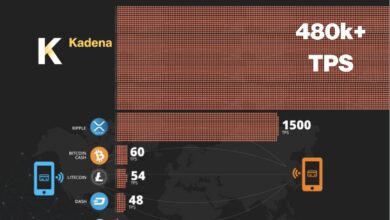
Bitcoin Hits 2022 High As Analyst Gives New $80K BTC Price Target
Despite recent market volatility, the price of Bitcoin remains on the upside, having surpassed the $40,587 resistance level and testing…
Read More » -
Crypto

Accel DeFi Review – Redefining Finance and the Web3
DeFi protocols allow users to be custodians of their own crypto funds. Users can interact with decentralized applications via a…
Read More » -
Finance

JPMorgan Chase & Co
JPMorgan Chase & Co. is an American multinational investment bank and financial services holding company headquartered in New York City.…
Read More » -
Crypto

Why Are NFTs Sold at Large Discount?
In the last decade, the number of NFTs issued has tripled, with more than $20 billion in annual sales. While…
Read More » -
Crypto
Hot Predictions For the ZEC Coin
The ZEC is a privacy token in the cryptocurrency space that consistently ranks among the top 20 cryptocurrencies. Like Bitcoin,…
Read More » -
Crypto

How to avoid slippage when trading on Uniswap
Uniswap makes token swaps accessible without a centralized exchange, but every transaction carries execution risk. The amount shown before approval is an estimate, and the final result can change before the swap is confirmed on-chain. That difference is known as slippage.
Some slippage is caused by normal market movement. The rest may come from shallow liquidity, large trade size, volatile tokens, network congestion, or the route selected by the decentralized exchange. Understanding these factors helps traders protect the value of each swap without making transactions unnecessarily difficult to execute.
The same discipline matters beyond individual trades. As digital assets become part of everyday commerce, the ideas behind crypto payment adoption will also depend on reliable pricing, efficient liquidity, and predictable settlement.
Understand what slippage means
Slippage is the difference between the expected exchange rate and the actual rate received. For example, a trader may preview a swap for 1 ETH and expect 3,000 USDC, but receive slightly less if the pool price changes while the transaction waits for confirmation.
Price impact is closely related but has a different cause. Price impact is the movement created by your own trade as it consumes available liquidity. Slippage tolerance is the maximum difference you allow between the quoted output and the final output. A transaction may fail when the market moves beyond that limit.
Uniswap displays an estimated price impact and minimum received amount before a swap is submitted. Review both figures rather than focusing only on the token amount shown in the quote. A high price impact is a warning that the pool may be too small for the order.
Choose liquidity carefully
Liquidity depth is one of the strongest influences on execution quality. Large pools generally absorb trades with less price movement, while low-liquidity pools can move sharply after a modest order. A popular token pair may still have fragmented liquidity across several pools and fee tiers.
Uniswap’s concentrated liquidity model can make pricing efficient within a specific range, but liquidity may become thinner outside that range. Check the available route, pool liquidity, trading volume, and recent price behavior before swapping unfamiliar or newly launched tokens.
Splitting a large trade into smaller transactions can sometimes reduce immediate price impact, although it may increase network fees and expose the trader to further market movement. Compare the total cost rather than assuming that multiple swaps are automatically better.
Set a practical slippage tolerance
Slippage tolerance should reflect the asset, order size, and current market conditions. Stablecoin swaps in a deep pool may work with a narrow tolerance, while volatile pairs may need more room. A very tight setting can cause a transaction to revert, wasting the network fee paid for the failed attempt.
A wide tolerance improves the chance of execution but can expose the trade to an unfavorable fill. This is particularly risky for illiquid tokens, where a purchase may execute at a price far worse than the initial quote. Avoid copying a high default tolerance without understanding why it is required.
Use the smallest tolerance that allows a normal transaction to complete. If the quote changes repeatedly, pause instead of continually increasing the setting. The problem may be inadequate liquidity, a rapidly moving market, or an unsuitable trading route.
Trading situation Main risk More careful approach Stablecoin swap in a deep pool Temporary quote movement Use a narrow tolerance and verify the minimum received Large trade relative to pool liquidity Significant price impact Reduce order size, split execution, or find deeper liquidity Volatile token pair Rapid market movement Trade smaller amounts and review the quote immediately before signing Newly launched or illiquid token Severe impact and token-specific risks Check liquidity, contract details, and sellability before buying Congested network conditions Delayed confirmation and stale quote Consider a faster confirmation strategy or wait for calmer conditions Improve transaction timing
A Uniswap quote is not a guaranteed price. It can become outdated while a transaction waits in the mempool, especially during sudden market moves. Confirm that the gas fee and transaction speed are appropriate for current network conditions before submitting the swap.
Avoid trading during sharp price spikes unless the opportunity justifies the execution risk. A calmer market usually provides more stable quotes and fewer failed transactions. If the price changes substantially during review, refresh the quote rather than signing an old transaction.
The transaction deadline also matters. A short deadline prevents an old swap from executing much later at an unexpected price, while an overly short deadline may cause a valid transaction to expire during congestion. Use a reasonable window that matches network conditions and the urgency of the trade.
Reduce exposure to MEV and routing risk
Some on-chain traders and automated bots monitor pending transactions. They may identify a large swap and attempt to profit from the price movement around it, creating a worse execution price. This form of maximal extractable value, or MEV, can increase effective slippage.
Private transaction relays and compatible wallet features may reduce public mempool exposure on supported networks, though availability and costs vary. Traders should also avoid broadcasting unusually large swaps when a smaller, staged execution would achieve a similar goal.
Use reputable interfaces and verify the token contract before trading. A favorable quote is meaningless if the asset is a scam, has restrictive transfer rules, or cannot be sold. Slippage protection limits price deviation; it does not replace contract and liquidity research.
A practical checklist before swapping
Build a short routine and apply it consistently. The goal is to compare the expected benefit with the combined cost of price impact, network fees, approval transactions, and possible execution failure.
Before confirming a Uniswap trade, review these points:
- Check the pool’s liquidity, volume, fee tier, and estimated price impact.
- Confirm the minimum amount received and choose a measured slippage tolerance.
- Compare the trade size with the available liquidity instead of judging the token by market capitalization alone.
- Refresh the quote when the market is moving quickly or the transaction has been waiting.
- Verify the token contract, wallet recipient, network, and transaction deadline before signing.
For larger positions, consider testing with a small transaction first. This can reveal whether the route works as expected and whether the token has unusual transfer behavior. Keep records of the quoted amount, final amount, fees, and execution price so that future trades can be evaluated objectively.
Make each swap deliberate
Avoiding slippage on Uniswap is less about finding one perfect setting and more about controlling the variables that shape execution. Deep liquidity, sensible order sizing, accurate quotes, carefully chosen tolerance, and timely confirmation all contribute to a better fill.
Review every swap as a real financial transaction rather than an instant exchange. Check the pool, calculate the total cost, protect the minimum received amount, and step away when the execution conditions look abnormal. Apply this process before your next trade to preserve more of the value you intended to exchange.
-
Crypto
Buying and Selling Bitcoin in Canada
The most common way to buy and sell Bitcoin is through a cryptocurrency exchange. These exchanges are similar to traditional…
Read More »