-
Crypto
Blockchain to Disrupt Music Industry and Make it Change Tune’
The music industry is poised for a disruptive change and blockchain is the technology of choice for doing just that.…
Read More » -
Crypto
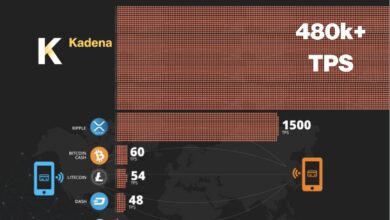
Bitcoin Hits 2022 High As Analyst Gives New $80K BTC Price Target
Despite recent market volatility, the price of Bitcoin remains on the upside, having surpassed the $40,587 resistance level and testing…
Read More » -
Crypto

Accel DeFi Review – Redefining Finance and the Web3
DeFi protocols allow users to be custodians of their own crypto funds. Users can interact with decentralized applications via a…
Read More » -
Finance

JPMorgan Chase & Co
JPMorgan Chase & Co. is an American multinational investment bank and financial services holding company headquartered in New York City.…
Read More » -
Crypto

Why Are NFTs Sold at Large Discount?
In the last decade, the number of NFTs issued has tripled, with more than $20 billion in annual sales. While…
Read More » -
Crypto
Hot Predictions For the ZEC Coin
The ZEC is a privacy token in the cryptocurrency space that consistently ranks among the top 20 cryptocurrencies. Like Bitcoin,…
Read More » -
Crypto

How to Assess Altcoin Liquidity Depth on Uniswap
Liquidity depth is the amount of buy and sell capacity available near an altcoin’s current price without causing a large price movement. It is a more useful measure of tradability than a project’s headline market capitalisation or total value locked (TVL).
For Australian traders, this matters when swapping from ETH or a stablecoin into an emerging token during volatile markets. A pool that looks active on a dashboard may still produce poor execution, especially when gas costs, Australian dollar conversion, and sharp moves during US trading hours are taken into account.
Measure What It Shows Main Limitation TVL Total assets deposited in a pool May be concentrated far from the current price 24-hour volume Recent trading activity Can be inflated by bots or short-term incentives Bid-and-ask depth Available liquidity around the market price Requires pool-level or simulation data Price impact Expected movement caused by a trade Changes with order size and direction Slippage Difference between quoted and executed price May include wallet settings and market movement Understand What Liquidity Depth Means
A deep market can absorb a reasonably sized order with limited price impact. A shallow market may display a competitive quote for a small swap but move several percentage points when the transaction is increased. The key question is not simply how much money sits in a pool, but how much is positioned close to the current exchange rate.
Uniswap liquidity is split between versions and pool designs. In Uniswap v2, liquidity is spread across the full price curve. In v3, liquidity providers choose price ranges, so capital can be highly concentrated. A token can therefore have substantial TVL while offering very little usable depth outside a narrow band.
Check The Correct Pool
Begin by identifying the exact token contract address and the pool used for the swap. Popular assets can have several pools against WETH, USDC, USDT or other tokens, and a similarly named counterfeit token can attract misleading volume. Confirm the contract through the project’s official documentation and a reputable block explorer.
Then compare fee tiers and quote assets. A USDC pool may offer a cleaner route for a stablecoin trader, while a WETH pool could be deeper for the broader market. Aggregators can find a better route, yet splitting an order across pools does not automatically remove the risks of low liquidity or a manipulated price.
Measure Price Impact Before Trading
Enter the intended trade size in Uniswap’s interface and record the quoted output, price impact and minimum received amount. Repeat the test with progressively larger amounts. If a modest increase in order size causes price impact to accelerate, the pool has a thin area near the current price.
A useful test is to compare a $100, $1,000 and $5,000 equivalent swap rather than relying on one quote. Australian users should convert the figures into AUD as well as US dollars, since an apparently small percentage loss can become material after ETH fees and the AUD exchange rate are included.
Inspect Concentrated Liquidity
For v3 pools, examine the active liquidity range around the current price. Liquidity positioned immediately beside the market price is relevant to execution; liquidity sitting far above or below it may be unusable until the token moves significantly. Price charts that show liquidity bands can make this distribution easier to understand.
Look for sudden gaps in the range. A large empty zone means a trade can move through several price levels quickly. It can also make the token vulnerable to a sharp collapse if liquidity providers withdraw or rebalance. This is particularly important for new meme coins, where a few wallets may control most of the effective trading capacity.
Use Reliable On-Chain Evidence
Block explorers, Uniswap analytics and independent portfolio tools can reveal pool reserves, recent swaps, holder concentration and liquidity-provider activity. Review several hours or days of data instead of trusting a single volume spike. Repeated small trades may represent wash trading rather than genuine demand.
For a broader explanation of transaction design and network settlement, the Lightning Network guide provides useful context, although Lightning itself is separate from Ethereum-based Uniswap swaps. The distinction matters because fast confirmation does not compensate for weak market depth.
Watch For Manipulation And Contract Risk
Liquidity depth can be distorted by temporary incentives, flash-loan activity or a token’s transfer restrictions. Check whether the contract can pause transfers, change fees, blacklist wallets or mint new supply. A deep pool cannot protect a trader from a malicious token contract.
Review the liquidity provider position as well. If one wallet or a small group controls most of the liquidity, they may remove it without notice. Security research and custody practices also deserve attention; a general wallet safety checklist can help reduce operational mistakes when approving an unfamiliar token.
Apply A Practical Trading Process
A disciplined process combines quotes, pool structure, transaction simulation and risk limits. Avoid treating a high TVL figure as a guarantee of easy execution. A trader in Sydney, Melbourne or Brisbane may also see different practical costs depending on the time of day, network congestion and the exchange used to acquire ETH or stablecoins.
Keep records of the token price, pool address, trade size, gas estimate and execution result. Australian residents may need this information for capital gains calculations and tax records, so transaction history has value beyond assessing a single swap.
Useful Checks Before A Swap
- Verify the token contract against an official project source.
- Compare at least two Uniswap pools and their fee tiers.
- Simulate several trade sizes to expose rising price impact.
- Inspect active v3 liquidity around the current price.
- Check recent volume for signs of organic, repeated activity.
Control Execution And Portfolio Risk
Set slippage tolerance according to observed depth rather than copying a default setting. A very tight tolerance may cause a transaction to fail, while an excessively wide setting can allow a poor fill during a sudden move. Private transaction tools or careful timing may reduce exposure to front-running, though they cannot create liquidity that is not present.
Ways To Reduce Liquidity Exposure
- Break a large swap into smaller orders when conditions support it.
- Prefer pools with stable, distributed liquidity and consistent volume.
- Avoid trading immediately after a major price spike.
- Keep enough ETH for gas instead of spending the full wallet balance.
- Review approvals and revoke unnecessary token permissions.
Australian market participants should also account for local exchange withdrawal times and AUD on-ramp spreads. A token may appear liquid on-chain while the route into or out of fiat is inconvenient. The broader crypto market, including educational coverage and project analysis, is available through Crypto News, while the actual Uniswap decision should rest on current pool data and realistic trade simulations.
-
Crypto
Buying and Selling Bitcoin in Canada
The most common way to buy and sell Bitcoin is through a cryptocurrency exchange. These exchanges are similar to traditional…
Read More »