-
Crypto

Blockchain to Disrupt Music Industry and Make it Change Tune’
The music industry is poised for a disruptive change and blockchain is the technology of choice for doing just that.…
Read More » -
Crypto
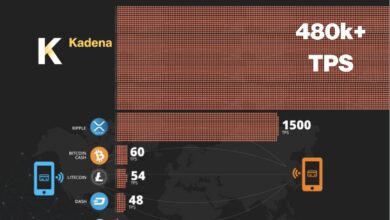
Bitcoin Hits 2022 High As Analyst Gives New $80K BTC Price Target
Despite recent market volatility, the price of Bitcoin remains on the upside, having surpassed the $40,587 resistance level and testing…
Read More » -
Crypto

Accel DeFi Review – Redefining Finance and the Web3
DeFi protocols allow users to be custodians of their own crypto funds. Users can interact with decentralized applications via a…
Read More » -
Finance

JPMorgan Chase & Co
JPMorgan Chase & Co. is an American multinational investment bank and financial services holding company headquartered in New York City.…
Read More » -
Crypto

Why Are NFTs Sold at Large Discount?
In the last decade, the number of NFTs issued has tripled, with more than $20 billion in annual sales. While…
Read More » -
Crypto
Hot Predictions For the ZEC Coin
The ZEC is a privacy token in the cryptocurrency space that consistently ranks among the top 20 cryptocurrencies. Like Bitcoin,…
Read More » -
Crypto

A Beginner’s Guide to Using Decentralized Exchanges Without KYC
Decentralized exchanges, or DEXs, let people trade digital assets directly from a self-custodied wallet. Instead of depositing funds with a centralised company, you connect your wallet to a blockchain application and approve swaps through smart contracts. Learn more about 316012 Nftburokkuchengemunotokunomikusu Fen Xi Chi Xu Ke Nengnapurojekutoha.
This model can provide access to tokens without opening an exchange account or completing a traditional identity check. However, using a DEX without KYC does not make transactions invisible. Blockchain activity is usually public, and wallet addresses can sometimes be linked to individuals through previous exchange deposits, social media activity or other records.
For Australians, the process also involves practical considerations such as network fees, Australian tax obligations and the difference between a DEX and a regulated fiat on-ramp. A trader in Sydney, Melbourne or Perth may be able to access the same protocol, but costs and transaction speed can vary significantly with market activity.
The safest approach is to treat a DEX as financial software rather than a casual website. Verify the correct URL, protect your wallet’s recovery phrase, test with a small amount and understand every approval before signing it.
How A Self-Custody Wallet Works
A wallet such as MetaMask, Rabby or a hardware wallet holds the keys that control your assets. It does not technically store coins inside the app; balances remain recorded on the relevant blockchain, while the wallet manages access to them.
Write the recovery phrase on paper or another secure offline medium, and never enter it into a website, form or chat window. A legitimate DEX support representative will not need it. Anyone with the phrase can control the funds, even if the wallet is protected by a password on your phone.
Choose the correct network before connecting. A token on Ethereum may have a different version on Arbitrum, Base, Polygon or BNB Chain. Sending an asset across incompatible networks can make recovery difficult or impossible, so beginners should start with a network and wallet combination they understand.
Checking A DEX Before Trading
A DEX normally uses smart contracts called automated market makers. These contracts hold liquidity in token pools and calculate prices according to the pool’s balances. Large trades can move the price, creating slippage between the displayed estimate and the final result.
Start from a reputable source rather than clicking a sponsored search result or a link in a social media post. Confirm the domain, inspect the connected network and check that the token contract address matches an established market-data source. Educational NFT market analysis can also help explain how project liquidity and token activity should be assessed.
Before connecting a wallet, run through these checks:
- Confirm the DEX domain and bookmark the verified address
- Check the token contract address through a trusted blockchain explorer
- Review liquidity, trading volume and recent price movements
- Look for independent audits while remembering that audits do not guarantee safety
- Avoid tokens with unexplained transfer restrictions or unusually high taxes
A new token can be created within minutes, and a convincing logo proves nothing. Be especially careful with coins promoted through anonymous Telegram groups, influencer posts or urgent giveaways. A pool may appear active while still being controlled by a small group of wallets.
Making A First Swap Carefully
Connect the wallet only after selecting the correct network and token pair. Enter a small test amount, review the estimated output and check the price impact. Slippage tolerance determines how much the execution price may move before the transaction is rejected; setting it too high can expose a trade to a poor fill.
Some DEXs require a separate token approval before the swap. This approval allows a smart contract to spend a specified asset from your wallet. Use limited approvals when possible, and later revoke permissions that are no longer needed through a reputable approval-management tool.
You will also need the network’s native coin to pay gas. Ethereum fees can rise sharply during busy periods, while cheaper networks may have lower fees but different liquidity or bridge risks. Never assume a swap is complete until the transaction shows as confirmed on a blockchain explorer.
Managing Australian Costs And Records
A DEX may not ask for your name, but Australian tax rules can still apply. The Australian Taxation Office generally treats cryptocurrency as property for tax purposes, and swapping one token for another can be a capital gains event. Moving between tokens, selling into a stablecoin or spending crypto may therefore require careful records.
Keep transaction hashes, dates, wallet addresses, Australian-dollar values, fees and the purpose of each transaction. Prices should be converted into AUD using a consistent, defensible source. Records become particularly important when assets move between a self-custody wallet and an Australian exchange that has identity checks and reporting obligations.
Track these details for every trade:
- Date and time of the transaction
- Token quantities sent and received
- AUD value at the time of the swap
- Gas fees and liquidity-provider charges
- Wallet addresses and transaction hashes
- Notes explaining transfers, gifts or investment intent
A DEX does not provide the same customer support, dispute process or account recovery service as a centralised exchange. If a wallet is drained through a malicious approval or a stolen recovery phrase, the transaction is generally irreversible. Consider professional tax advice when trading frequently, providing liquidity or using complex DeFi strategies.
Building Safer Long-Term Habits
Keep a separate wallet for experimental tokens and unfamiliar applications. A hardware wallet can reduce exposure to malware, although it cannot protect you from approving a malicious contract or signing a transaction you have not understood.
Be cautious with bridges, yield farms and liquidity pools. They may offer attractive returns, but smart-contract exploits, impermanent loss, oracle failures and token collapses can outweigh the advertised yield. High annual percentage returns usually reflect high risk rather than guaranteed income.
Australian users should also consider local operating conditions. During a busy trading session in Sydney or Melbourne, network congestion may make a small swap uneconomical. A trader in Brisbane or Adelaide may prefer to compare several networks, but lower fees should never outweigh concerns about liquidity, contract quality or bridge security.
For broader market context, Crypto News coverage can complement on-chain research, though news articles should not replace independent verification. A disciplined DEX user checks the contract, tests with a small amount, preserves records and accepts that self-custody means taking responsibility for every approval and transaction.
-
Crypto
Buying and Selling Bitcoin in Canada
The most common way to buy and sell Bitcoin is through a cryptocurrency exchange. These exchanges are similar to traditional…
Read More »