-
Crypto

Blockchain to Disrupt Music Industry and Make it Change Tune’
The music industry is poised for a disruptive change and blockchain is the technology of choice for doing just that.…
Read More » -
Crypto
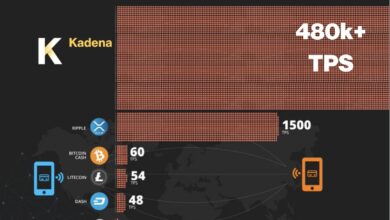
Bitcoin Hits 2022 High As Analyst Gives New $80K BTC Price Target
Despite recent market volatility, the price of Bitcoin remains on the upside, having surpassed the $40,587 resistance level and testing…
Read More » -
Crypto

Accel DeFi Review – Redefining Finance and the Web3
DeFi protocols allow users to be custodians of their own crypto funds. Users can interact with decentralized applications via a…
Read More » -
Finance

JPMorgan Chase & Co
JPMorgan Chase & Co. is an American multinational investment bank and financial services holding company headquartered in New York City.…
Read More » -
Crypto

Why Are NFTs Sold at Large Discount?
In the last decade, the number of NFTs issued has tripled, with more than $20 billion in annual sales. While…
Read More » -
Crypto
Hot Predictions For the ZEC Coin
The ZEC is a privacy token in the cryptocurrency space that consistently ranks among the top 20 cryptocurrencies. Like Bitcoin,…
Read More » -
Crypto

Why Tokenized Treasuries Are Winning Over Institutional Yield Hunters
The cryptocurrency industry has entered a quieter, more pragmatic phase. After years of chasing double-digit returns through speculative tokens, professional allocators are rediscovering a familiar asset class dressed in new code. Tokenized US Treasuries have quietly become the fastest-growing real-world asset segment on public blockchains, and the institutional money following them is reshaping how yield is generated in digital finance.
A tokenized treasury is a blockchain-based claim on short-duration US government bonds. Funds backed by assets such as BlackRock's BUIDL, Ondo's OUSG, or Hashnote's USYC hold portfolios of Treasury bills and issue equivalent tokens on Ethereum, Solana, or Stellar. Smart contracts automate yield distribution while investors gain risk-free exposure without brokerages or wire transfers.
Australia has not been left behind. Sydney-based asset managers are evaluating tokenized fixed-income products alongside traditional bond allocations, and Melbourne's fintech community is building issuance platforms. The Reserve Bank of Australia's wholesale CBDC pilot paved the way for tokenized assets denominated in Australian dollars, while the ASX's migration of its CHESS system to distributed ledger technology hints at where mainstream finance is heading.
The shift is also a response to compressed crypto-native yields. With lending markets on Aave and Compound offering single-digit returns and stablecoin issuers competing on rates, professional desks needed something more reliable. Tokenized Treasuries fill that gap with regulated, low-volatility exposure that can settle on a Sunday morning.
What tokenized treasuries actually represent
Each token corresponds to a fractional share of a managed fund holding short-term US government debt. Authorised participants deposit dollars, receive tokens, and watch the fund's net asset value accrue interest daily. On redemption, the fund sells the underlying T-bills and returns principal plus accumulated yield.
Because the tokens live on public ledgers, ownership transfers are instant and fractionalisation is frictionless. A trading desk in Brisbane can move a million-dollar position across chains in minutes, using tokens as margin on decentralised exchanges or collateral in lending protocols. Traditional safety combined with programmable settlement is what makes the structure compelling.
The institutional pivot toward on-chain yield
Several macro forces have converged. Interest rates remained elevated through 2024 and 2025, pushing T-bill yields above 4 percent for extended periods. Crypto-native strategies produced compressed returns as decentralised finance matured and arbitrage opportunities narrowed.
Settlement efficiency also matters. Traditional Treasury trades clear through custodians and broker-dealers on T+1 or T+2 timelines, while tokenized versions bypass those rails entirely. Some allocators appreciate the privacy gains available through technologies such as zero-knowledge proofs, which let institutions verify accreditation without exposing their full wallet history.
The result is a hybrid product that satisfies compliance officers while preserving the operational speed crypto-native funds have always prized.
Australia's growing appetite for tokenized bonds
The local reception has been stronger than expected. Australia's superannuation sector holds trillions in retirement savings, and a small but growing slice is being routed toward tokenized fixed-income strategies. Sydney's Perpetual and Melbourne's AusSuper have explored digital asset mandates, while boutique managers in Brisbane run pilot allocations.
The ASX's decision to migrate settlement infrastructure to blockchain technology has legitimised tokenization for risk committees. Beyond Australia, the trend is global; analysts tracking Japanese exchange rankings note that Asian venues increasingly offer tokenized securities alongside conventional listings, suggesting the institutional case is no longer confined to Western markets.
Australian dollar-denominated products remain rare, but issuers including Swiftline and Maple have signalled interest in launching AUD vehicles once regulatory clarity improves.
Comparing yields against stablecoins and DeFi farms
Stablecoin issuers currently advertise yields between 3 and 8 percent depending on jurisdiction. DeFi lending can spike higher, but rates fluctuate with utilisation and token incentives. Tokenized Treasuries sit in the middle, tracking the underlying bond portfolio at 4 to 5 percent with minimal correlation to crypto volatility.
For an institutional treasurer, that stability is the entire point. The products also integrate smoothly with traditional workflows; indeed, the broader adoption of blockchain in supply chain finance demonstrates how programmable money is reshaping working capital, trade settlement, and now fixed-income investing. A tokenised treasury position can be pledged as collateral, sliced across desks, or restaked into structured products without leaving the blockchain.
Risks still lurking under the surface
The story has friction. Smart contract bugs remain a non-trivial risk, and several funds have paused redemptions during stress events. Custodial arrangements vary, with some issuers relying on traditional banks and others on crypto-native custodians with shorter track records.
Regulatory treatment is uneven. While the United States has clarified that certain tokenized funds fall under existing securities law, Australia's stance under ASIC guidance is still evolving. Liquidity on secondary markets can also be thin, particularly for newer issuances, meaning large exits may require waiting through redemption windows.
Investors must also remember that the credit risk of the underlying T-bills does not disappear because the wrapper is cryptographic. Sovereign risk, inflation risk, and currency risk all pass through to the holder.
What comes next for the tokenized treasury market
Total value locked in tokenized Treasuries surpassed several billion dollars in late 2024 and continues to climb. New issuers are entering, including traditional asset managers launching their own on-chain products. Cross-chain interoperability is improving, letting positions move freely between Ethereum layer-2 networks, Solana, and permissioned ledgers used by banks.
For Australian institutions, the most interesting development may be locally domiciled products. Once ASIC finalises its framework for digital asset funds and the ASX's blockchain settlement system goes live, tokenized Treasuries denominated in Australian dollars could become a routine treasury tool for corporates rather than a curiosity for crypto-native funds.
Practical considerations before committing capital
Allocators weighing tokenized Treasuries should keep several factors in mind:
- Confirm the issuer is registered with relevant regulators and the underlying fund is independently audited
- Review the redemption window and any lock-up periods before subscribing
- Diversify across maturities to reduce exposure to interest rate moves
- Evaluate the custodian's insurance coverage and operational history
- Assess smart contract audit reports and any historical incident disclosures
- Monitor secondary market liquidity if rapid exit is a priority
- Stay current on Australian tax treatment, particularly withholding and CGT events
-
Crypto

Buying and Selling Bitcoin in Canada
The most common way to buy and sell Bitcoin is through a cryptocurrency exchange. These exchanges are similar to traditional…
Read More »