-
Crypto
Blockchain to Disrupt Music Industry and Make it Change Tune’
The music industry is poised for a disruptive change and blockchain is the technology of choice for doing just that.…
Read More » -
Crypto
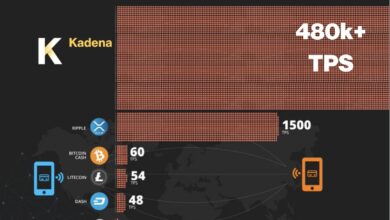
Bitcoin Hits 2022 High As Analyst Gives New $80K BTC Price Target
Despite recent market volatility, the price of Bitcoin remains on the upside, having surpassed the $40,587 resistance level and testing…
Read More » -
Crypto

Accel DeFi Review – Redefining Finance and the Web3
DeFi protocols allow users to be custodians of their own crypto funds. Users can interact with decentralized applications via a…
Read More » -
Finance
JPMorgan Chase & Co
JPMorgan Chase & Co. is an American multinational investment bank and financial services holding company headquartered in New York City.…
Read More » -
Crypto
Why Are NFTs Sold at Large Discount?
In the last decade, the number of NFTs issued has tripled, with more than $20 billion in annual sales. While…
Read More » -
Crypto

Hot Predictions For the ZEC Coin
The ZEC is a privacy token in the cryptocurrency space that consistently ranks among the top 20 cryptocurrencies. Like Bitcoin,…
Read More » -
Crypto

Building a Crypto Mining Rig on a Budget in 2025
Crypto mining is back in Aussie garages from Brisbane to Perth, with hobbyists rebuilding old PCs and grabbing bargain ASICs for block rewards. Rising prices and cheaper second-hand gear have made it appealing to everyday Aussies not running industrial-scale operations.
Profit depends on three unforgiving variables: hardware cost, electricity price, and network difficulty. Australia's residential power sits among the most expensive in the developed world, so the maths matter more here than in most competing jurisdictions. Hardware choices and location separate a few hundred bucks a month from watching the meter rack up losses.
What follows is a walkthrough for having a crack at home mining without spending more than a grand, covering hardware, Australian parts sourcing, software, and the realities of selling what you mine.
Choosing the Right Hardware for Your Rig
Bitcoin mining has moved past the era where consumer graphics cards could compete, with ASICs like the Bitmain Antminer S21 and Whatsminer M60S setting the efficiency benchmark. These cost more upfront but chew through less power per terahash, which matters on a Sydney electricity rate.
GPU mining has shifted to altcoins like Kaspa, Ravencoin, and Ergo. A rig built from second-hand RTX 3070s still turns a profit in the right market, and the hardware keeps resale value for gamers. ASICs become doorstops once a new generation arrives, so depreciation risk is real.
A comparison for budget miners in 2025:
Feature Budget ASIC (e.g. S21) Used GPU Rig (6× RTX 3070) Upfront cost (AUD) $4,000–$6,500 $1,200–$2,000 Power draw ~3,500 W ~1,200 W Best coin Bitcoin Kaspa, Ravencoin, Ergo Resale value Low after 2 yrs High (gamer demand) Noise Loud (70+ dB) Moderate (~50 dB) Setup difficulty Plug and mine Linux tuning required For someone starting under two grand in suburban Adelaide, a GPU rig is the lower-risk entry. Power consumption halves, cooling eases, and components earn their keep on the secondary market.
Sourcing Parts in Australia
Buying locally dodges GST and shipping surprises. Stores like Scorpion Technology, Batex, and Centre Com ship across Australia. Brisbane and Melbourne buyers often collect same-day from warehouse outlets, while Perth and Darwin customers face longer hauls.
Gumtree, Facebook Marketplace, and the r/AusMining community are fertile grounds for bargain ASICs from miners who quit or upgraded. Always test the hash rate and inspect hash boards for burnt components before paying. Australians carry a fair-dinkum second-hand culture, and deals appear, especially in cooler months when ex-miners offload ahead of summer heat.
Smart places to start the hunt:
- BTC Markets and Independent Reserve discount ASIC sales
- Sydney and Melbourne crypto meetups for direct peer sales
- Pickup-only Gumtree listings with verified hash-board photos
- Bulk pallet auctions from data centres exiting mining
- Brisbane and Perth PC recycler spare-parts bins
- Telegram altcoin groups flagging local deals
Managing Power Bills in a High-Cost Market
Electricity is where any budget mining venture lives or dies. Australian residential rates hover around 30c per kWh, with South Australia climbing higher during peak demand. A single Antminer S21 pulls 3,500 watts, roughly $25 a day, near $750 a month.
Several miners offset costs by relocating to Western Australia or regional South Australia, where solar uptake is high and daytime rates are kinder. Pairing panels with daylight-hour mining slashes grid consumption. Time-of-use tariffs from AGL, Origin, and EnergyAustralia reward load shifting, so running rigs off-peak from 10pm to 7am can cut bills by a third.
Trim wattage without losing too much hash:
- Flash Braiins OS+ or LuxOS for auto-undervolting on supported ASICs
- Drop GPUs to 70–80% power limit via MSI Afterburner
- Consolidate multiple miners onto one higher-efficiency PSU
- Disable background lighting and unnecessary USB peripherals
- Schedule rig wake-up only during off-peak tariff windows
- Replace stock fans with slower, quieter models where thermals allow
Cooling Strategies for the Aussie Climate
Heat is the silent killer of mining hardware, and Australia obliges with summers past 40 degrees. ASICs throttle when hot, so airflow management is non-negotiable. Ducting exhaust outside with a cheap inline fan, mounting PSUs away from the rig, and sitting units on concrete instead of timber flooring all help.
Evaporative cooling works in Adelaide and regional Victoria, where dry air makes a real dent in shed temperatures. In humid Brisbane, refrigerated cooling wipes out profit. Many builders run a hybrid: mine through winter unheated, then shut down over summer when the maths stop working.
Software, Wallets and Getting Paid
For ASICs, the manufacturer's web interface handles pool connection, with firmware like Braiins OS+ offering better efficiency than stock. GPU miners typically run NiceHash, GMiner, or lolMiner, with HiveOS or SimpleMining handling fleet management when scaling up.
For any Bitcoin earned, exchanges like BTC Markets, Independent Reserve, or Swyftx handle the AUD conversion. Settling smaller balances via the Lightning Network helps avoid hefty on-chain fees that nibble into already thin margins. Cold storage through a Ledger or Trezor adds security for coins intended to sit long term.
Joining a Pool or Going Solo
Solo mining against Bitcoin in 2025 is a lottery ticket unless serious hash power is involved, so most home miners join pools to smooth payouts. Australia's geographic isolation helps with latency to Asian pools like F2Pool and ViaBTC, with ping times to Singapore often outperforming European connections. Solo altcoin mining remains viable for GPU rig owners chasing smaller networks.
Pool fees range from 0.5% to over 2%, and schemes like PPS, FPPS, and PPLNS each suit different strategies. PPS offers predictable income for steady operators, while PPLNS rewards loyal miners who stay online. Starting with a larger pool gives steadier cash flow, and switching later is straightforward.
Pocketing Your Earnings and Tax
Australia treats cryptocurrency as property for tax purposes, with the ATO expecting miners to declare income as either trading stock or capital gains. Keeping records of every payout, the AUD value at receipt, and hardware and electricity cost basis is essential, because the data is easier to gather as you go. Tools like Koinly, CoinTracker, and CryptoTaxCalculator integrate with Australian exchanges and pool APIs.
Profitable scaling means reinvesting selectively. A common Aussie approach is to mine with the current rig, bank profits in a low-cost portfolio, then upgrade only when efficiency gains justify the spend. The rig pays for itself before new gear arrives, which beats buying on credit in a volatile market.
-
Crypto

Buying and Selling Bitcoin in Canada
The most common way to buy and sell Bitcoin is through a cryptocurrency exchange. These exchanges are similar to traditional…
Read More »