-
Crypto
Blockchain to Disrupt Music Industry and Make it Change Tune’
The music industry is poised for a disruptive change and blockchain is the technology of choice for doing just that.…
Read More » -
Crypto
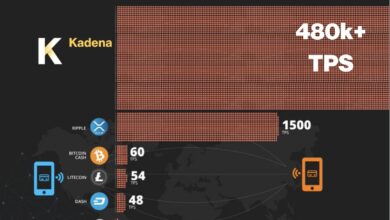
Bitcoin Hits 2022 High As Analyst Gives New $80K BTC Price Target
Despite recent market volatility, the price of Bitcoin remains on the upside, having surpassed the $40,587 resistance level and testing…
Read More » -
Crypto

Accel DeFi Review – Redefining Finance and the Web3
DeFi protocols allow users to be custodians of their own crypto funds. Users can interact with decentralized applications via a…
Read More » -
Finance

JPMorgan Chase & Co
JPMorgan Chase & Co. is an American multinational investment bank and financial services holding company headquartered in New York City.…
Read More » -
Crypto
Why Are NFTs Sold at Large Discount?
In the last decade, the number of NFTs issued has tripled, with more than $20 billion in annual sales. While…
Read More » -
Crypto

Hot Predictions For the ZEC Coin
The ZEC is a privacy token in the cryptocurrency space that consistently ranks among the top 20 cryptocurrencies. Like Bitcoin,…
Read More » -
Crypto

Tokenized Art Is Reshaping the Way Artists Earn
For decades, painters, photographers and digital creators relied on galleries, agents and auction houses to translate their work into income. The arrival of blockchain-based certificates of ownership has rewritten that arrangement. Tokenized art converts a piece into a verifiable digital asset recorded on a public ledger, allowing it to be sold, resold or fractionalised without intermediaries skimming the margins. The model is giving creators tools that did not exist a generation ago, and the financial mechanics behind it are still being mapped out across studios, marketplaces and regulatory desks.
Australian creators are paying close attention. With Sydney's art scene worth billions and Melbourne regularly hosting major fairs, the local appetite for new income models is strong. Studios in Fitzroy and Surry Hills are already experimenting with blockchain-backed releases, while platforms operating in Australia fall under ASIC and AUSTRAC oversight. The conversation is shifting from novelty toward practical revenue planning.
What Tokenized Art Actually Means
At its core, tokenization attaches a unique cryptographic identifier to a creative work. That identifier, usually a non-fungible token, sits on a blockchain and carries proof of authorship, edition number and transaction history. Buyers can verify the chain of custody instantly, and creators can embed logic directly into the asset. The technology borrows from the same infrastructure that powers cryptocurrencies, but its application in the visual arts is distinct and rapidly maturing.
Unlike a digital file stored on a hard drive, a tokenized artwork exists as an entry on a distributed ledger. Even if the image is copied, the original token cannot be duplicated. This distinction matters for collectors, insurers and tax authorities, including the Australian Taxation Office, which has begun publishing guidance on how digital assets are treated at tax time.
Old Models Versus Tokenized Models
The differences between traditional gallery sales and tokenized art sales are stark enough to deserve a side-by-side look.
Revenue factor Traditional gallery route Tokenized art route Primary sale share to artist 40–60% after commission 80–100% after gas fee Resale royalties None in most cases Programmable, often 5–10% Buyer reach Local or auction-room Global, 24/7 Settlement time Weeks to months Minutes Proof of authenticity Paper certificate On-chain signature The comparison makes clear why so many creators are testing the new channel. Reporting on 3diw.com has followed several Australian drops where artists retained the lion's share of their primary sales for the first time in their careers.
Royalties That Follow the Artwork
One of the standout mechanics of tokenized art is the embedded royalty clause. Smart contracts can be coded to send a percentage of every secondary sale back to the original creator, automatically and indefinitely. If a token changes hands ten times, the artist can receive a cut of all ten transactions without lifting a finger.
This has profound implications for living artists, particularly those at mid-career whose work appreciates years after creation. In Australia, where resale rights for physical artworks remain limited compared with Europe, the smart-contract alternative is being watched closely by bodies representing painters and printmakers in capital cities and regional centres alike.
Programmable Income and Fractional Ownership
Beyond royalties, tokenized art unlocks several income pathways creators did not previously enjoy.
- Direct minting and primary sales without gallery commission
- Fractional ownership allowing partial investment in high-value pieces
- Time-locked releases that vest ownership gradually over years
- Subscription access tokens that double as membership cards
- Collaborative editions where revenue splits execute automatically on chain
Fractional ownership is particularly relevant for emerging Australian artists working in expensive media like bronze or large-scale installation, where a single buyer is hard to find. By splitting a work into many tokens, the price point drops, while the artist retains control of the master record and the long-term income stream.
Direct Channels Between Artist and Collector
Middlemen have long captured a disproportionate slice of art-market revenue. Tokenized art pushes much of that activity onto open marketplaces where creators upload their work, define their terms and communicate directly with buyers. The shift echoes broader trends in Web3 commerce, where peer-to-peer settlement replaces institutional gatekeeping.
For an Australian painter selling from a studio in Collingwood or a digital artist working out of Brisbane, this means access to collectors in London, Tokyo or São Paulo without flying anywhere. It also means the creator's brand travels with the work, strengthening their reputation and pricing power in the secondary market.
Australian Artists and Institutions Catching Up
Local uptake is gaining momentum. Sydney Contemporary, the country's largest art fair, has hosted panels on blockchain provenance, while the National Gallery of Victoria has explored digital exhibitions. RMIT in Melbourne runs blockchain-focused research that touches on creative industries, and First Nations artists have used tokenized drops during NAIDOC Week to reach diaspora audiences overseas.
Regulators are also paying attention. ASIC has reminded platforms that promotional content for tokenized assets must follow financial-services disclosure rules, and AUSTRAC registration applies to exchanges handling Australian dollars. Artists navigating this landscape are advised to seek accounting advice before launching a drop, particularly around goods and services tax obligations on primary sales.
What to Check Before Launching or Buying
Whether you are a creator considering a drop or a collector eyeing a new release, a few practical points deserve attention.
- Confirm the platform is registered with AUSTRAC if it converts AUD
- Review the smart contract for royalty percentages and timelocks
- Check storage arrangements for the artwork file itself
- Verify the artist's identity through on-chain attestation
- Consider how the Australian Taxation Office will treat any gain on resale
Tokenized art is not a magic substitute for sound business practice. But for creators willing to learn the tools, it offers a wider and more durable income surface than the gallery model ever provided.
-
Crypto

Buying and Selling Bitcoin in Canada
The most common way to buy and sell Bitcoin is through a cryptocurrency exchange. These exchanges are similar to traditional…
Read More »