-
Crypto
Blockchain to Disrupt Music Industry and Make it Change Tune’
The music industry is poised for a disruptive change and blockchain is the technology of choice for doing just that.…
Read More » -
Crypto
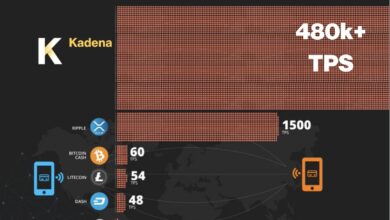
Bitcoin Hits 2022 High As Analyst Gives New $80K BTC Price Target
Despite recent market volatility, the price of Bitcoin remains on the upside, having surpassed the $40,587 resistance level and testing…
Read More » -
Crypto
Accel DeFi Review – Redefining Finance and the Web3
DeFi protocols allow users to be custodians of their own crypto funds. Users can interact with decentralized applications via a…
Read More » -
Finance

JPMorgan Chase & Co
JPMorgan Chase & Co. is an American multinational investment bank and financial services holding company headquartered in New York City.…
Read More » -
Crypto

Why Are NFTs Sold at Large Discount?
In the last decade, the number of NFTs issued has tripled, with more than $20 billion in annual sales. While…
Read More » -
Crypto

Hot Predictions For the ZEC Coin
The ZEC is a privacy token in the cryptocurrency space that consistently ranks among the top 20 cryptocurrencies. Like Bitcoin,…
Read More » -
Crypto

How DePIN Is Rebuilding Real-World Infrastructure
Decentralized physical infrastructure networks, commonly called DePIN, connect blockchain-based incentives with equipment operating in the real world. Instead of relying entirely on large corporations to build and manage connectivity, storage, mapping, computing power or energy systems, these networks encourage individuals and businesses to contribute hardware and receive digital tokens in return.
The model is gaining attention because it addresses a practical problem in crypto: how can blockchain technology create value outside financial markets? DePIN projects attempt to answer that question through distributed wireless networks, geolocation services, cloud computing and data collection. For Australian users, the idea has particular relevance across dense cities, regional communities and remote industrial areas.
How DePIN Networks Operate
A typical DePIN platform has three elements: physical hardware, a software protocol and a token-based reward system. Participants may install a wireless hotspot, provide spare storage, operate a graphics processing unit or collect location data. The network records useful contributions, often through cryptographic proofs, and distributes rewards according to agreed rules.
The blockchain does not necessarily control every physical device. Instead, it can provide settlement, ownership records and transparent incentive calculations. A separate verification layer may check whether a node is online, whether data is credible or whether a service has reached its advertised performance. This structure helps reduce dependence on a single central operator, although many projects still use companies for software, marketing and hardware supply.
The Main DePIN Use Cases
Wireless connectivity is one of the best-known applications. Helium, for example, built a community-operated network in which participants deploy hotspots and earn rewards for providing coverage and transferring data. Similar concepts could support sensors, logistics tracking and low-bandwidth devices in locations where traditional network expansion is expensive.
Other projects focus on decentralised storage, cloud computing and mapping. Filecoin allows users to contribute storage capacity, while Render connects people with spare graphics processing power to customers needing rendering resources. Mapping networks can reward drivers or fleet operators for collecting street-level information. These services may become useful in Australia, where large distances separate cities such as Sydney, Melbourne, Perth and Darwin.
Why Australia Has A Natural Role
Australia’s geography creates a strong use case for distributed infrastructure. Communities in regional Queensland, Western Australia and the Northern Territory may face higher costs for broadband, environmental monitoring and logistics than residents in major metropolitan areas. A network of locally operated devices could help collect information about weather, agriculture, vehicles, air quality or remote assets without requiring one company to own every sensor.
Everyday infrastructure also creates opportunities. The National Broadband Network has improved connectivity across much of the country, but service quality and available technologies vary by location. DePIN systems could complement existing networks by supporting local wireless coverage or edge computing rather than attempting to replace regulated telecommunications providers.
Bushfire monitoring, water management and mining operations are further examples. Sensor networks can detect changes in temperature, smoke or soil conditions, while edge devices can process information closer to where it is collected. In theory, token incentives could encourage deployment in areas that commercial operators overlook. In practice, the economics must be strong enough to cover equipment, maintenance, electricity and connectivity.
Token Economics And Regulatory Questions
The token is central to most DePIN projects, but it can create a difficult balance. If rewards are too generous, the network may attract hardware operators who care more about emissions than genuine demand. If rewards fall sharply, participants may switch off devices or sell their equipment. Sustainable projects need paying customers whose use of storage, bandwidth, computing or data supports the rewards distributed to contributors.
Australian participants also need to consider regulation. A token may be treated differently depending on its design, marketing and economic function, with the Australian Securities and Investments Commission examining whether some digital assets fall within financial product rules. Platforms handling virtual asset services can also face obligations under Australia’s anti-money-laundering framework, while privacy and consumer laws matter when a project collects personal or location data.
Hardware operators should review local requirements before deployment. Wireless equipment may involve spectrum and device standards, and commercial activity can create tax obligations. Token prices can be highly volatile, so a projected return based on current market conditions is not the same as reliable income. Keeping up with daily market updates can help users distinguish network growth from short-term speculation.
Measuring Real DePIN Value
The strongest way to assess a DePIN project is to examine usage rather than headline token price. Important indicators include active devices, paying customers, data transferred, storage utilisation, geographic coverage and the percentage of rewards funded by real demand. A network with thousands of idle nodes may have less practical value than a smaller platform serving businesses consistently.
Security and verification deserve equal attention. A project needs methods to prevent fake locations, duplicate devices and low-quality data. It must also explain who repairs hardware, how governance decisions are made and what happens if the issuing company disappears. Decentralisation can distribute ownership, but it does not automatically solve poor maintenance or weak accountability.
DePIN Category Physical Contribution Potential Australian Use Key Risk Wireless networks Hotspots and small-cell equipment Regional connectivity and IoT coverage Spectrum, competition and installation costs Distributed storage Hard-drive capacity Business backups and archival data Reliability, privacy and data retrieval Compute networks GPUs or other processing hardware AI, rendering and scientific workloads Energy prices and volatile demand Mapping platforms Vehicle-mounted sensors or mobile data Road mapping, logistics and infrastructure planning Data accuracy and privacy Environmental networks Weather, air or soil sensors Bushfire, farming and water monitoring Hardware maintenance and uneven coverage For Australian crypto users, DePIN is best viewed as an infrastructure experiment rather than a guaranteed passive-income strategy. Its long-term prospects depend on whether token-funded participation can deliver services that are cheaper, more resilient or more useful than conventional alternatives. If projects can connect credible demand with reliable local hardware, blockchain networks may become part of how communities monitor, share and build physical resources.
-
Crypto

Buying and Selling Bitcoin in Canada
The most common way to buy and sell Bitcoin is through a cryptocurrency exchange. These exchanges are similar to traditional…
Read More »