-
Crypto

Blockchain to Disrupt Music Industry and Make it Change Tune’
The music industry is poised for a disruptive change and blockchain is the technology of choice for doing just that.…
Read More » -
Crypto
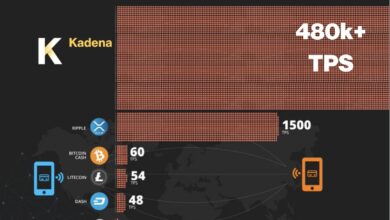
Bitcoin Hits 2022 High As Analyst Gives New $80K BTC Price Target
Despite recent market volatility, the price of Bitcoin remains on the upside, having surpassed the $40,587 resistance level and testing…
Read More » -
Crypto

Accel DeFi Review – Redefining Finance and the Web3
DeFi protocols allow users to be custodians of their own crypto funds. Users can interact with decentralized applications via a…
Read More » -
Finance

JPMorgan Chase & Co
JPMorgan Chase & Co. is an American multinational investment bank and financial services holding company headquartered in New York City.…
Read More » -
Crypto
Why Are NFTs Sold at Large Discount?
In the last decade, the number of NFTs issued has tripled, with more than $20 billion in annual sales. While…
Read More » -
Crypto

Hot Predictions For the ZEC Coin
The ZEC is a privacy token in the cryptocurrency space that consistently ranks among the top 20 cryptocurrencies. Like Bitcoin,…
Read More » -
Crypto

Spotting rug pulls before they drain your DeFi portfolio
Decentralised finance promised an open alternative to traditional banking, and millions of Australians have already dipped a toe into liquidity pools, yield farms and decentralised exchanges. Yet the same permissionless design that attracts users also attracts bad actors. Rug pulls, where developers drain liquidity or vanish with investor funds, remain one of the most damaging threats to anyone allocating capital to emerging protocols.
Australian regulators have taken notice. AUSTRAC has tightened reporting requirements for digital currency exchanges, while ASIC has repeatedly warned consumers about unlicensed crypto products marketed locally. None of that oversight extends to a smart contract deployed by an anonymous team halfway across the world. Personal due diligence remains the strongest line of defence.
The good news is that most rug pulls leave fingerprints. By understanding how these scams are structured, what warning signs appear on-chain, and which yield claims should set off alarm bells, even newer participants from Sydney, Melbourne or Perth can dramatically reduce their exposure to fraudulent projects.
What rug pulls actually look like in DeFi
A rug pull occurs when the team behind a token or liquidity project removes value from the protocol, typically by withdrawing the assets backing a trading pair or by minting unlimited tokens to dump on the market. The most common variant is the liquidity removal rug, where developers yank the ETH or stablecoins paired with their token on a decentralised exchange, leaving holders with an illiquid, near-worthless asset.
Other variations include soft rugs, where insiders slowly sell into a thin order book while marketing continues, and exit scams where the roadmap was never intended to ship. In every case, the project collapses because trust was misplaced in people rather than code.
Liquidity pool red flags worth monitoring
One of the clearest warning signs is when liquidity is locked for only a short window or not locked at all. Tools like DexScreener, Unicrypt or Team.Finance let users inspect whether LP tokens have been sent to a time-locked contract. A project locking liquidity for just a week, or refusing to lock it altogether, deserves deep suspicion regardless of how polished its website appears.
Watch the ratio of locked to unlocked tokens too. If developers and advisors hold 40 percent or more of supply with linear unlocks over twelve months, even an honest team can flood the market. Pair that with liquidity under a few hundred thousand dollars, and a single sell order can swing price by double digits, making honest exits and rug pulls indistinguishable.
Anonymous teams and unverifiable credentials
Pseudonymity is not automatically a red flag; many credible builders in the crypto space operate under handles. The problem arises when there is no track record at all. Search team members' prior contributions on GitHub, look for code commits under their stated names, and check whether claimed employers can be verified through LinkedIn or previous project histories.
Australian investors should be wary of projects that lean heavily on paid influencer endorsements as a substitute for transparency. Telegram groups filled with shilling accounts, glossy Medium articles with no technical depth, and Discord servers moderated by recently created profiles all point to a manufactured hype layer rather than real community support.
Smart contract audits and the limits of the badge
A reputable audit from a firm like Trail of Bits, OpenZeppelin, Certora or Quantstamp carries weight, but is not a guarantee. Audits are snapshots, and exploits often occur past publication because the protocol was upgraded without re-review. Read the actual report rather than relying on the audited badge.
Equally important is the bug bounty. Projects offering meaningful rewards for disclosed vulnerabilities, such as those running on Immunefi, demonstrate a culture of continuous security rather than a one-off checkbox. A protocol that audits once, then disables its bug bounty after launch, has effectively removed its safety net.
Token distribution, vesting and unlock cliffs
Tokenomics reveal intent. Concentrated holdings, low circulating supply reserved mostly for insiders, and aggressive vesting cliffs are classic set-ups for dumping. Use Nansen, Arkham or Etherscan to trace the largest wallets and check whether insiders are moving tokens to exchanges ahead of any scheduled unlock.
Projects with reasonable distribution, transparent vesting schedules and gradual emissions tend to align incentives more honestly. If a token unlocks a large tranche each month and the team sells the moment it vests, the message is clear.
Community signals and on-chain forensics
Genuine communities argue, debate proposals and surface legitimate criticism. Fake communities are echo chambers where dissent is banned. Spend time in the Discord before committing funds, and look for governance forums with substantive technical discussion rather than emoji-heavy hype threads.
On-chain forensics tools expose insider behaviour. Cluster analysis can reveal whether a community wallet is funded from the deployer address. Several Australian crypto analysts based in Brisbane and Melbourne run local research communities around these techniques, sharing wallet labels and dashboards in real time.
Permissioned alternatives and safer yield strategies
Rug pull fears have pushed the industry toward more constrained designs. Some DeFi protocols now adopt permissioned lending pools that restrict participation to whitelisted borrowers, reducing the attack surface and offering a more institutional flavour of decentralised finance.
Australians unwilling to chase 1,000 percent APYs in unaudited farms are better served by blue-chip protocols, diversified stablecoin allocations and realistic three to eight percent yields on quality lending markets.
Rug pull type Typical mechanism Warning signs Recovery chance Liquidity removal Devs withdraw LP tokens, draining the pair Short or no lock, anonymous team Very low Soft dump Insiders sell into thin order book over weeks Concentrated wallets, low volume Low Honeypot Sell function blocked or taxed to 100% Failed test sells, restrictive code Near zero Exit scam Project abandoned after raising funds No roadmap delivery, vanishing team Very low Oracle manipulation Price feed pushed to drain lending pools Single oracle source, low liquidity Low Practical safeguards for Australian DeFi participants
- Verify liquidity is locked for at least six months through a recognised locker
- Confirm at least one audit from a reputable firm and an active bug bounty
- Trace the top ten wallets holding the token and check for team concentration
- Start with small positions and use separate hot wallets for experimental farms
- Reject yield offers that look too good relative to AUD risk-free benchmarks
- Cross-check any project promoted by influencers with independent on-chain research
-
Crypto

Buying and Selling Bitcoin in Canada
The most common way to buy and sell Bitcoin is through a cryptocurrency exchange. These exchanges are similar to traditional…
Read More »